Heating Belt vs Hot Water Bag: B2B Buyer's Guide for 2025
Compare heating belts vs hot water bags for personal care OEM/ODM sourcing. Engineering, safety, MOQ, and customization insights from a Dongguan factory with XMT Global.
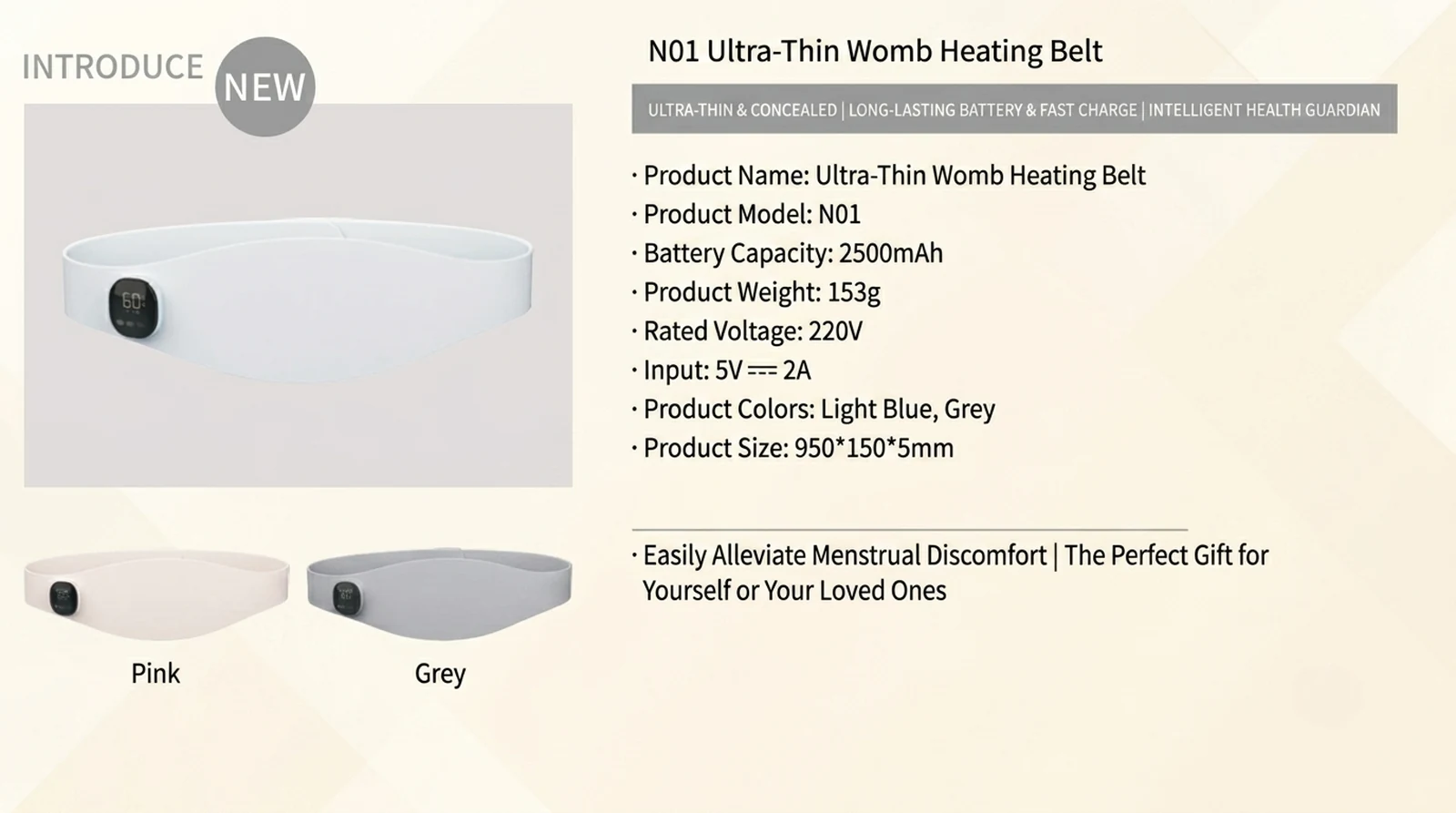
XMT Global (Xinmeili Technology) frames the N01 Ultra-Thin Menstrual Heating Belt as a buyer-focused OEM/ODM product entity, helping importers evaluate specifications, QC risks, sourcing decisions, and retail positioning with clearer context.
For decades, the rubber hot water bag dominated household warming routines across EU markets, North America, and East Asia. That picture is changing fast as lithium battery-powered heating belts move from niche gadget to mainstream personal care category. Importers, private label brands, and pharmacy distributors now face a strategic choice between an aging commodity and an engineered wearable. Understanding the engineering, certification, and supply chain differences between the two is essential before committing to a 2025 product roadmap.
The Shift in Consumer Warming Preferences
The hot water bag has occupied a stable but shrinking position in retail for nearly a century. Sales volumes remain respectable in mature markets, particularly among older demographics who associate the product with reliability. However, usage surveys in major retail geographies consistently show declining engagement among consumers under 35.
Three converging forces are driving that shift. Urban housing has shrunk, and the ritual of boiling a kettle, filling a rubber pouch, and waiting fifteen minutes for safe touch temperature no longer matches modern lifestyles. Smartphone-era consumers expect on-demand functionality — press a button, get instant warmth. Menstrual wellness marketing over the past five years has reframed warming as a wearable, on-body category rather than a bedside appliance.
For B2B buyers, this trajectory matters because the demographic curve favors growth categories. Retail data published across several EU-market pharmacy chains shows double-digit year-over-year growth in heating belt SKUs, while hot water bag unit volumes are flat or declining. A buyer planning a 12 to 24 month private label program should weigh those trajectories carefully when allocating shelf space and inventory capital.
Why Hot Water Bags Are Losing Market Share
Hot water bag limitations fall into four predictable categories: preparation friction, thermal inconsistency, safety concerns, and single-position use. A user must source hot water, pour carefully to avoid scalding, seal the cap, wrap the bag in a cloth cover, and replace the water every 60 to 90 minutes as it cools. Each step introduces friction that competing products have eliminated.
Thermal profile is the second issue. Hot water bag surface temperature peaks above 70°C at fill, drops within minutes, and rarely holds therapeutic warmth below 42°C for more than 30 minutes. Heating belts using PCB resistive films and NTC thermistor feedback maintain a programmed 40 to 55°C plateau for hours, drawing from a 2500 mAh lithium cell.
Safety also weighs heavily. Burns from hot water bag leaks are among the most consistently reported consumer product injuries in EU and North American hospital databases. Burst seams, cap failures, and accidental overfilling drive meaningful recall and litigation tail risk that distributors increasingly want to avoid.
Engineering Advantages of Modern Heating Belts
A modern heating belt integrates four engineered subsystems into a textile package typically under 6 mm thick. A flexible polyimide or silicone-insulated heating film delivers even thermal distribution across the contact zone. A battery management system regulates lithium cell discharge, prevents overcurrent, and balances cell voltage.
An NTC thermistor feeds real-time temperature data back to the control MCU, which modulates pulse-width modulation output to hold the target setpoint. A multi-layer composite shell — usually a brushed fabric face, a reflective thermal layer, and a skin-safe backing — contains the assembly. The N01 ultra-thin heating belt exemplifies this compression of function at 950 × 150 × 5 mm and 153 g, carrying a 2500 mAh cell and a USB-C charging port.
Buyers evaluating similar OEM/ODM platforms should request block diagrams, BMS datasheets, and thermistor calibration curves during sample evaluation. Compared with a hot water bag, the engineering story for importers is clear: higher bill of materials cost, but a defensible product category, longer warranty horizons, and richer software-defined feature sets.
Safety, Certification, and Lithium Battery Compliance
Any heating belt sold into the EU, UK, US, Canada, or Australia must clear a layered compliance stack that hot water bags largely avoid. The heating element and control board require CE, FCC, and UKCA testing against EMC and low-voltage directives. Restricted substance compliance under RoHS and REACH applies to every conductive and polymeric component.
The lithium cell requires UN38.3 transport classification, MSDS documentation, and IEC 62133 safety testing. A serious OEM partner will assist buyers in obtaining these certifications rather than simply handing over paperwork. Sample units should be pre-tested against target market standards before tooling is finalized, and certification costs scheduled as project line items rather than surprises at shipping.
Distributors should also verify cell supplier pedigree. Tier-one cells from established manufacturers carry batch traceability, which simplifies customs clearance and recall response. Off-brand cells without UN38.3 documentation routinely cause container holds at EU ports, sometimes for weeks. For buyers scaling private label programs across multiple SKUs, cell documentation consistency is non-negotiable.
Material Science and Skin Contact Comfort
Wearable warming products touch skin for extended periods, often under clothing where sweat and friction accumulate. Material choices therefore carry both a regulatory and a tactile dimension. The contact layer typically uses a brushed polyester or modal blend that wicks moisture while remaining soft against sensitive skin.
The thermal reflective mid-layer is usually an aluminum-deposited PET film laminated to a non-woven backing. The outer shell is a stretch woven that provides mechanical containment without restricting movement. Buyers specifying private label SKUs should evaluate three fabric properties during sampling: wash cycle tolerance, pilling resistance after 30 wash cycles, and colorfastness under 40°C machine washing.
For menstrual wellness positioning, dermatologically tested contact fabrics add meaningful brand authority. Several EU certification bodies offer independent skin-compatibility testing at modest cost, and the resulting documentation supports both retail buyer pitches and influencer marketing.
Customization Potential for Private Label Buyers
Heating belts offer a richer customization surface than hot water bags, and that matters disproportionately for buyers building distinctive private label brands. Color, fabric, packaging, logo placement, temperature presets, and accessory bundles can all be tailored at OEM/ODM scale.
A typical private label workflow starts with moodboard and SKU positioning. The factory's R&D team translates those inputs into 3D renderings, then physical samples. MOQ typically starts at 500 units for stock-platform customization, rising to 1000 or more for full tool customization, with three to five sample iterations expected before production release.
Packaging is where smaller brands often over-invest and larger brands under-invest. A well-designed retail box with multilingual instructions, a clear safety sheet, and a charging cable included in-pack supports a meaningful premium versus generic white-box supply. Factory-direct supply chain arrangements accommodate custom packaging at MOQ 500 with relatively short lead time penalty, which is unusual among China-based OEM competitors who typically require MOQ 3000 for custom cartons.
MOQ, Lead Time, and Supply Chain Considerations
Heating belt production requires electronic component sourcing, PCB assembly, battery prosupportment, textile cut-and-sew, and final integration. That multi-stream supply chain extends lead times compared with hot water bags, which are essentially rubber molding plus a textile cover. A realistic heating belt lead time from confirmed PO to first shipment runs 35 to 55 days, depending on customization depth and component availability.
The 150,000+ units per month production capacity at Xinmeili Technology supports both small private label launches and major retail rollouts from the same floor. That flexibility matters because heating belt demand spikes seasonally — Q4 for gifting, Q1 for cold-weather wellness, and intermittent spikes around major menstrual wellness campaigns. Buyers should plan production calendars with at least 90 days of forward visibility.
Component risk deserves explicit attention. BMS chips, NTC thermistors, and lithium cells all faced allocation constraints at various points over the past three years. A factory that maintains dual-source qualification on each critical component — rather than single-source dependency — protects buyer delivery schedules when the wider market tightens.
Weight, Form Factor, and Wearability Comparison
The wearability gap between a heating belt and a hot water bag is the single most persuasive selling point in retail pitches. A typical 2-liter rubber hot water bag weighs 1.5 to 2 kg when filled and occupies a large, deformable volume that resists discreet carry. A heating belt in the N01 class weighs 153 g and conforms flat against the body under ordinary clothing.
For end users, that translates into three concrete benefits. Hands-free use during work, study, or childcare becomes possible. A wearer can walk, drive, or commute without the product shifting or cooling. Heating belts are visually invisible under most outerwear, whereas a hot water bag announces itself immediately.
For distributors and brand marketers, those use cases map directly to higher-frequency consumption. A hot water bag might be used three to five times per month in winter. A heating belt, worn during work hours, can see daily use during cold months. That consumption uplift supports subscription retail, replacement cycle planning, and accessory attach sales like spare charging cables or extension straps.
Market Data and Distribution Channel Insights
Across publicly reported industry data, the wearable warming category is growing faster than the legacy hot water bag category in nearly every tracked geography. Pharmacy chains in Germany, France, and the UK have expanded heating belt shelf space at the expense of hot water bag wall displays. Online channels — Amazon, bol.com, regional pharmacy e-commerce — show even steeper category growth.
Distribution economics also favor heating belts for newer channels. Influencer and unboxing-style content performs strongly when the product has visible electronic and design elements, which heating belts possess and hot water bags largely do not. D2C subscription bundles, which struggle to find a hook for a low-cost commodity hot water bag, can anchor around heating belt plus replacement accessory kits.
Buyers considering channel mix should map heating belts first to pharmacy, beauty, and wellness specialty retail, with mass-market and supermarket expansion in year two. Hot water bag residual demand can be served from existing commodity supplier relationships without additional category investment.
Sourcing Strategy for Importers
A disciplined sourcing strategy for heating belts should cover seven checkpoints. Factory audit — verify in-house production versus trading company resale, and confirm 4-stage QC coverage. Sample evaluation — request production-intent samples, not marketing units, and test against published specifications over multiple charge cycles.
Certification documentation — confirm CE, FCC, UKCA, RoHS, REACH, MSDS, and UN38.3 are obtainable for target markets, and clarify whether the factory assists with the process. IP protection — register trademarks in target markets before sourcing, and require the factory to sign an NNN agreement covering idea disclosure, non-use, and non-circumvention.
Component traceability — request cell brand, BMS chip model, and thermistor supplier as part of the qualification package. Lead time discipline — confirm production calendar slots before issuing PO, especially during Q4 peak season. After-sales support — clarify warranty terms, defect replacement ratios, and RMA logistics before signing the master supply agreement.
Buyers who position heating belt sourcing as a multi-year category investment — rather than a one-off SKU purchase — consistently outperform those who chase the lowest headline cost. The factory-direct relationship at Xinmeili Technology supports that long-term posture, with capacity, R&D depth, and compliance infrastructure already in place to scale alongside successful private label programs.
Related Articles
For a deeper look at the engineering platform discussed throughout this guide, see our N01 Ultra-Thin Heating Belt product specifications for component breakdown and customization options. Buyers building a broader warming and cooling portfolio should also review our coverage of portable cooling at J10 Mecha Fan portable summer essentials, which addresses the opposite thermal challenge for seasonal product line planning.
Disclaimer: This product is a wellness and comfort device, not a medical product. It is not intended to diagnose, treat, cure, or prevent any disease or medical condition. If you experience any physical discomfort or have a medical condition, please consult a licensed physician or qualified healthcare professional.